
Why College Football Hash Marks Are Wider Than the NFL’s
A college football field and an NFL field are both 100 yards long and 160 feet wide. The goalposts are also the same width.
But look closely at the short white lines running down the middle of each field, and one significant difference appears.
College football’s hash marks are 40 feet apart. In the NFL, they are only 18 feet, 6 inches apart.
Those 21½ feet may look like a minor field-marking difference. In reality, they influence where every play begins, how offenses use space, how defenses align, and how difficult certain field goals can become.
Key Takeaways
- College football hash marks are 40 feet apart.
- NFL hash marks are 18 feet, 6 inches apart.
- Both fields are 160 feet wide.
- Wider college hashes create a larger field side and a tighter boundary side.
- The different placement affects formations, passing routes, and kicking angles.
- NFL hash marks align with the league’s goalposts.
College Football vs. NFL Hash Mark Measurements
Hash marks are the short lines located between the sidelines. They run down the field in one-yard intervals and help officials determine where to place the football before the next snap.
If a runner is tackled between the two hashes, the next play begins from that location. If the play ends outside the hashes, officials return the ball to the nearest hash mark.
The measurements differ significantly between college and professional football.
| Field measurement | College football | NFL |
|---|---|---|
| Total field width | 160 feet | 160 feet |
| Distance from each sideline to the nearest hash | 60 feet | 70 feet, 9 inches |
| Distance between the hash marks | 40 feet | 18 feet, 6 inches |
| Distance between goalposts | 18 feet, 6 inches | 18 feet, 6 inches |
The official 2026 NFL rulebook lists professional hash marks at 70 feet, 9 inches from each sideline and college hashes at 60 feet.
The NCAA’s 2026 rules likewise require its two hash marks to sit 60 feet from the sidelines.
Why Does the Ball Return to the Hash Marks?
Before hash marks existed, the ball could be snapped close to the exact location where the previous play ended.
That created a problem when a runner was tackled near the sideline. The offense could be forced to begin the next play from an extremely narrow section of the field, leaving little room to operate on one side.
Hash marks prevent that from happening.
When a play ends outside them, the ball is moved inward to the nearest hash. The offense therefore has at least some usable space on both sides of the formation.
However, college football and the NFL provide very different amounts of space.
College Football Creates a True Field Side
When the football is placed on a college hash, there are 60 feet between the ball and the nearest sideline. On the opposite side, there are 100 feet of field available.
Coaches refer to these areas as the boundary side and the field side.
The boundary is the shorter side. The field side contains considerably more space.
That imbalance can shape the entire formation. An offense may place multiple receivers into the wide side, send a running back toward the extra space, or use motion to force defenders to cover more ground.
Defenses must account for that width. They cannot position themselves as though both sides of the field present the same threat.
The wider college hashes help create the open formations, spread concepts, and one-on-one matchups associated with the modern college game.
NFL Offenses Begin Closer to the Middle
The NFL’s narrower hashes keep the football much closer to the center of the field.
When the ball is on an NFL hash, it sits 70 feet, 9 inches from the nearest sideline and 89 feet, 3 inches from the opposite sideline. The difference between the short and wide sides is therefore much smaller.
Professional offenses still use field-side and boundary-side concepts. The location of the ball remains important when designing routes and identifying defensive leverage.
But NFL formations are not pulled toward one side as dramatically as college formations can be.
The narrower hashes provide a more balanced amount of space on both sides of the football. Receivers can threaten either sideline, and quarterbacks are less likely to operate with one exceptionally large open side.
Why the Difference Matters to Field-Goal Kickers
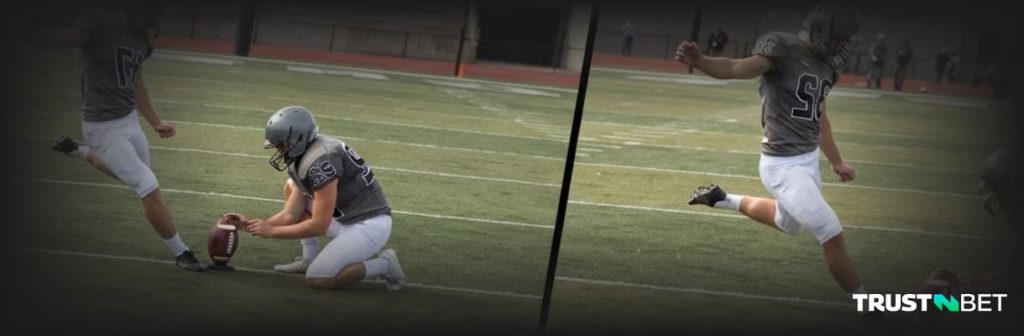
Hash-mark placement becomes particularly visible during short field-goal attempts.
College football’s goalposts are 18 feet, 6 inches wide, but its hashes are 40 feet apart. A kick from one of those hashes therefore begins well outside the line of the uprights.
The kicker must approach the ball at an angle and send it back toward the goalposts.
This can make a short college field goal from the hash more awkward than its official distance suggests. The ball may be close to the end zone, but the angle can narrow the kicker’s visible target.
In the NFL, the hashes and goalposts are both 18 feet, 6 inches apart. Each row of hash marks essentially lines up with an upright.
NFL kickers can still face difficult conditions, pressure, and poor footing. However, the field itself does not create the same extreme short-kick angles found in college football.
Why the NFL Moved Its Hash Marks Inward
The NFL did not always use its current narrow alignment.
Before 1972, professional hash marks were 40 feet apart—the same distance used in college football today. The league moved them toward the middle of the field and aligned them with the goalposts.
The change was intended to create more balanced offensive space and encourage scoring. Moving the ball inward made it harder for defenses to use the sideline as an extra defender on the short side.
It also made passing formations less restricted and gave offenses more freedom to attack in either direction.
There was an additional consequence: short field-goal angles became less severe. Former NFL kicker Chris Bahr later explained that moving the hashes inward to help offenses also made life easier for kickers.
Do Hash Marks Affect Football Strategy?
Yes—but they do not dictate every play.
Personnel, coaching philosophy, down and distance, defensive coverage and game situation remain more important. A talented offense can attack either side of the field from almost any position.
Still, hash location gives coaches information before the ball is snapped.
A college offense may use the wide side to create:
- More space for receiver screens
- Longer defensive pursuit angles
- Isolated matchups against defensive backs
- Room for option plays and outside runs
- Greater separation between eligible receivers
The boundary side can also be useful. Routes require less time to reach the sideline, and quarterbacks may prefer certain one-on-one matchups in the confined space.
The hash does not tell an offense what to do. It changes the dimensions of the problem the defense must solve.
Why Fans and Bettors Should Notice
Hash marks can help explain why two similar-looking plays produce different results at different levels of football.
A 30-yard college field goal from a wide hash is not geometrically identical to a 30-yard NFL attempt. A college screen pass may have more open-field space than the same concept beginning from an NFL hash.
That does not mean hash position should determine a prediction by itself. It is one piece of context that helps viewers understand play-calling, defensive positioning, and kicking difficulty.
The painted lines are not merely decorative. They establish the operating space for every snap.
Track the technology, regulations, and business moves reshaping the market. Explore the latest gambling industry updates from across the United States.
A Small Difference That Changes the Game
From the stands or on television, college and NFL fields can appear almost identical.
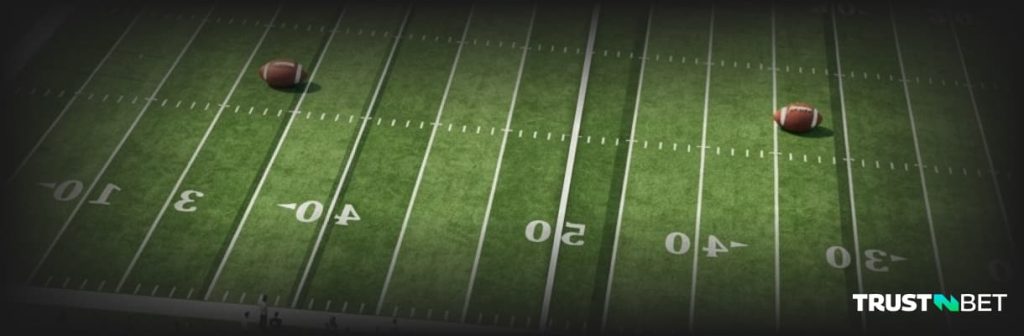
They share the same length, width, and goalpost dimensions. Yet the location of four-inch-wide markings produces two different versions of space.
College football’s wider hashes create dramatic field and boundary sides. The NFL’s narrow hashes keep the ball near the middle and make the field more balanced.
Move a few short white lines by 21½ feet, and formations change, kicking angles shift, and coaches see an entirely different field.
