The NFL’s Loneliest Job: Why Sunday Belonged to the Kickers
For almost three hours, the quarterback owns the screen. Coaches control the strategy. Defenders create the collisions.
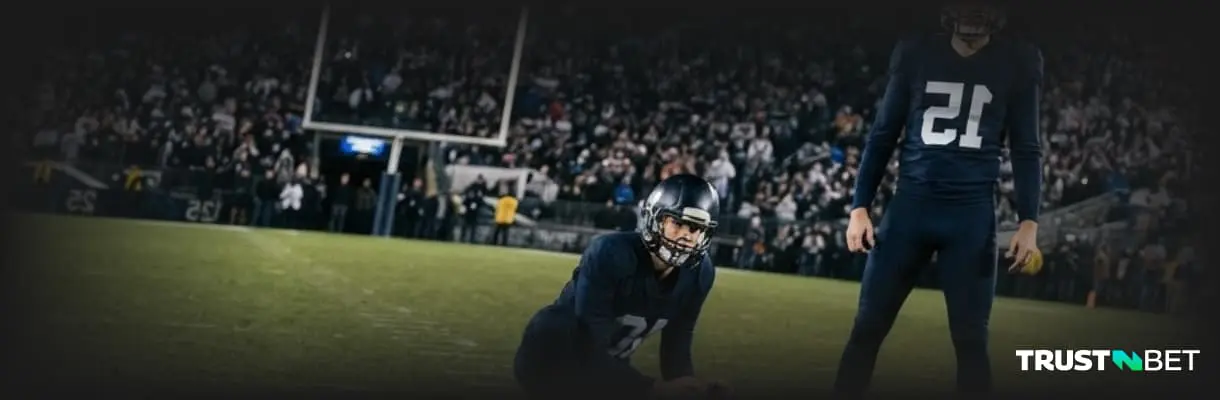
Then the clock reaches zero, 21 players become supporting actors, and one man is asked to kick a strangely shaped ball between two yellow posts.
That was the story of NFL Week 6.
In London, Ka’imi Fairbairn converted a 49-yard field goal as time expired to give the Houston Texans a 34-31 victory over the Jacksonville Jaguars.
Several hours later, Andre Szmyt kicked Cleveland past Baltimore, 13-10, with another walk-off field goal. His first attempt was blocked, but an offside penalty gave him a second chance. Szmyt converted from 37 yards, moving the Browns level with the Ravens atop the AFC North.
Two cities. Two games. Two kickers standing between victory and a very uncomfortable flight home.
Welcome to the NFL’s most isolated job.
Beyond the final score, discover the money, decisions, and power moves reshaping competition in our latest U.S. sports news coverage.
Key Takeaways
- Two NFL Week 6 games ended with successful walk-off field goals.
- A normal field-goal operation can take less than 1.4 seconds.
- The kicker depends heavily on the long snapper and holder.
- NFL goalposts are only 18 feet, 6 inches wide.
- Teams provide specially prepared footballs for kicking plays.
- A kicker can spend most of a game waiting, then decide everything.
Two NFL Games, Two Kicks at Zero
Houston and Jacksonville traded points throughout Sunday’s international game at Wembley Stadium.
C.J. Stroud threw three touchdown passes, Jacksonville moved the ball effectively on the ground and the teams entered the final seconds tied at 31. Houston’s last drive did not need another touchdown. It only needed to move Fairbairn close enough to finish the job.
He connected from 49 yards as the clock reached zero.
Cleveland’s winning sequence was even more dramatic. Szmyt lined up for a 37-yard attempt against Baltimore, only to have the kick blocked. The Ravens appeared to have survived—until officials called them offside.
The penalty gave Cleveland another attempt.
Szmyt returned to the same spot, repeated the same routine, and sent the second kick through the uprights. The NFL’s official Week 6 takeaways captured a Sunday on which several games remained undecided until their final moments.
For a kicker, “forget the last play” is not motivational language. Sometimes it is an immediate job requirement.
The Kicker Spends Most of the Game Waiting
Most NFL players remain involved throughout a game.
Quarterbacks read defenses. Receivers run routes. Offensive linemen collide on nearly every snap. Defensive players constantly substitute, communicate and prepare for the next series.
The kicker waits.
He practices into a net on the sideline, checks the wind and tries to keep his leg warm. He may go an entire quarter without entering the game. Then, without warning, a turnover or long completion puts his team within field-goal range.
Suddenly, he must go from spectator to specialist.
There may be no gradual introduction. No easy first touch. No chance to build rhythm.
The kicker could be asked to attempt his first field goal of the afternoon with the game tied and millions of people watching.
A Field Goal Is a Three-Man Operation
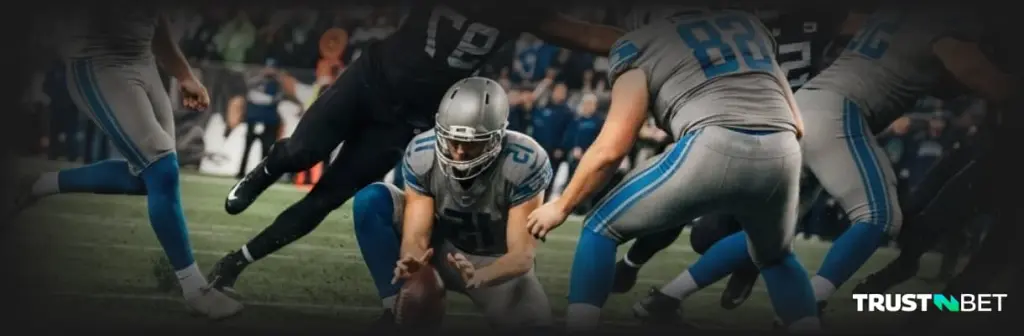
The television camera focuses on the kicker, but every attempt begins with the long snapper and holder.
First, the snapper must fire the ball accurately between his legs. The holder must catch it, position it on the turf, and rotate the laces away from the kicker. Only then can the kicker complete his approach and strike the ball.
The entire sequence happens extraordinarily quickly.
A normal NFL field-goal operation—from snap to kick—generally takes around 1.27 to 1.34 seconds. Any significant delay gives defenders a better opportunity to break through the protection and block the attempt.
That means the holder cannot carefully examine the ball and adjust it several times. He receives a fast snap, places it correctly and removes his fingers before the kicker’s foot arrives.
When a field goal succeeds, the kicker receives the glory. When it fails, the problem may have started before his foot ever reached the ball.
The Target Is Smaller Than It Looks on Television
NFL goalposts measure 18 feet, 6 inches across. The crossbar stands 10 feet above the ground.
From directly in front of the posts, that window may appear generous. From more than 50 yards away—or from a difficult angle near one of the hash marks—it becomes considerably smaller.
The kicker must also account for wind, temperature, field conditions, and the ball’s flight.
A powerful kick is not automatically a good one. Driving the ball too low increases the risk of a block. Launching it too high can sacrifice distance. Striking it slightly away from the intended point can send it curving outside the upright.
And unlike a golfer, the kicker cannot pause indefinitely because the wind changed. The play clock is running, the defense is preparing to rush and the snap is coming.
NFL Kickers Use Special Footballs
The football used for a field goal is not simply whichever ball happens to be closest.
NFL teams make specially marked kicking balls available before games. These balls are inspected and controlled under league procedures rather than being used interchangeably with every offensive game ball.
Each team also supplies primary and backup game footballs for inspection well before kickoff. The preparation is carefully regulated because even subtle changes to the ball can affect grip, handling, and flight.
That does not eliminate unpredictability.
The ball still has to travel from the snapper to the holder without wobbling. The holder must position it on grass or artificial turf. The kicker must strike it while defenders attempt to reach him.
The equipment may be controlled. The moment never is.
Why Kicking Is More Mental Than It Looks
A quarterback can throw an interception and receive another possession five minutes later. A cornerback can allow a catch and make a tackle on the next play.
A kicker may not get another opportunity.
That creates a unique mental challenge. Kickers must remember technical details without becoming trapped by them. They need confidence without pretending the pressure does not exist.
The situation Szmyt faced against Baltimore was especially difficult. He completed his approach, watched the kick get blocked, and briefly believed the opportunity had disappeared.
Then the penalty returned him to the field.
He had to reset mentally while both teams reorganized around him. The second attempt was technically similar but emotionally different. One kick came with uncertainty. The next carried the entire game.
He made it.
The Kicker Is Never Truly Alone
The image is always the same: the kicker stands several steps behind the holder while the stadium waits.
But the result was built by far more than one player.
An offense had to move into range. A coaching staff had to manage the clock. The long snapper had to deliver the ball. The line had to protect the kicking point. The holder had to complete one of football’s least appreciated acts of hand-eye coordination.
Even the kicker’s preferred position on the field can influence the preceding play call. A team may intentionally run toward one hash mark because its kicker prefers that angle.
The final kick looks like an individual test. In reality, it is the last step in a team operation.
The Cruel Mathematics of the Job
Kickers exist in a profession where success is expected, and failure is remembered.
Make a routine field goal, and the broadcast quickly returns to commercials. Miss the same kick and television replays may follow you for the rest of the week.
The position offers very little middle ground. The ball crosses the plane between the uprights, or it does not. Three points appear, or they do not.
That unforgiving simplicity is what makes the job so compelling.
Fans can debate whether a quarterback made the correct read or whether a defender should have received help. Nobody needs an advanced statistic to understand a kick sailing wide.
Sunday’s Quietest Players Made the Loudest Plays
Stroud threw three touchdowns in London. Defenders forced turnovers. Coaches made dozens of decisions across both games.
The final word belonged to Fairbairn and Szmyt.
That is the strange life of an NFL kicker. He can stand near the sideline for most of the afternoon, largely unnoticed, until the entire stadium turns in his direction.
The snap arrives. The holder catches it. The kicker swings.
Around 1.3 seconds later, he is either surrounded by teammates or walking off alone.
On Sunday, the loneliest job in football produced two very crowded celebrations.
