The Green Bay Packers Don’t Need Private Equity…Here’s Why
The Green Bay Packers just posted a rare operating loss, and team president Ed Policy has identified a growing concern: rival NFL owners can raise hundreds of millions of dollars by selling minority stakes to private-equity firms. Green Bay cannot.
That sounds like a competitive disadvantage. It may actually be one of the franchise’s greatest strengths. The Packers generated record revenue, finished the year with substantial net income and pushed their corporate reserve fund beyond $700 million. More importantly, they do not have an owner looking to unlock personal wealth from a soaring franchise valuation.
Private equity gives NFL owners liquidity. Green Bay already has something more valuable: financial stability, shared league revenue and more than half a million shareholders who never expect a payout.
Want more stories shaping American sports? Explore the latest sports news in the USA for breaking headlines, business insights, and must-read analysis.
Key Takeaways
- Green Bay reported record revenue despite posting a rare $1.1 million operating loss.
- The Packers still generated $132.5 million in net income after investment gains and other non-operating revenue.
- Their corporate reserve fund has climbed to approximately $701 million.
- Private equity provides liquidity, but the Packers do not have an individual owner who needs to cash out.
- NFL revenue sharing and the salary cap continue to protect small-market competitiveness.
- Green Bay’s real challenge is funding stadium, staffing and facility costs outside the salary cap.
- The Packers can close that gap through sponsorships, events, Titletown and smarter local revenue growth.

Green Bay’s $1.1 Million Loss Is Not the Whole Story
A headline saying the Packers lost money naturally grabs attention. The full financial picture is much less alarming. Green Bay reported an operating loss of $1.1 million for the fiscal year ending March 31, 2026. That was a dramatic reversal from the previous year’s $83.7 million operating profit.
But this was not a franchise suddenly running out of cash. Player costs increased by $131.7 million as several major contract decisions hit the books at once. New deals, released players and the aggressive acquisition of Micah Parsons all contributed to an unusually expensive year.
Even then, Green Bay’s financial report included:
- $753.5 million in total revenue
- $453.2 million in national revenue
- $132.5 million in net income
- $133.6 million in non-operating income
- A $701 million corporate reserve fund
Local revenue also increased by $13.4 million despite the Packers playing only eight regular-season home games. The operating loss matters. It deserves attention. But treating it as evidence that Green Bay suddenly needs outside investors would be like judging the final score after the first quarter. The franchise remains loaded with resources.
Why Private Equity Entered the NFL

The NFL opened its ownership structure to private equity in 2024. Under the rules, approved firms can collectively purchase as much as 10% of a team, with each investment representing at least a 3% stake. These are passive positions. Private-equity representatives do not receive voting power or start making draft-night decisions.
What they provide is cash. A billionaire owner can sell a small portion of a franchise without surrendering control. With NFL teams now valued in the billions, even a limited stake can produce an enormous financial windfall.
That money can help fund:
- New stadiums and major renovations
- Practice facilities
- Surrounding real-estate developments
- Coaching and support staffs
- Technology, nutrition and performance departments
- Other sports and entertainment investments
The Buffalo Bills and Miami Dolphins were among the first teams to take advantage. They exchanged minority positions for immediate access to capital while their controlling owners remained firmly in charge. For traditional owners, it is an attractive option. For the Packers, it answers a question that does not really exist.
The Packers Have No Owner Who Needs Liquidity
This is the most important distinction. Most private-equity transactions do not happen because an NFL franchise is struggling to sell tickets or pay its players. They happen because ownership wants liquidity from an increasingly valuable asset.
A family may have billions tied up in a team but comparatively little available cash. Selling 10% allows that family to monetize part of the franchise without giving up control. Green Bay has no billionaire owner sitting on an enormous paper fortune.
The Packers have approximately 538,967 shareholders holding more than 5.2 million shares. Those shares do not pay dividends, appreciate, or trade on a public exchange. They cannot be treated like traditional investments.
Packers shareholders buy because they want to support the team. They receive the pride of calling themselves owners, voting privileges and access to the annual shareholders meeting—not a financial return. That means Green Bay does not need private equity to create a payday for ownership. There is nobody at the top waiting to cash a billion-dollar check. The franchise’s money stays focused on the franchise.
Green Bay Already Built Its Own Fund
Policy described private equity as an ATM available to other teams but not the Packers. That comparison makes sense when considering how quickly another franchise could raise $500 million or more. Green Bay required decades of disciplined saving to build its reserve. Still, that reserve now stands at approximately $701 million. That is not pocket change. It is one of the strongest safety nets in professional sports.
The Packers created the fund to protect themselves against major disruptions, unexpected expenses and the financial risks attached to operating in the NFL’s smallest market. It helped provide security when games were played without full stadiums during the pandemic, and it continues to generate investment income.
Private-equity capital also comes with an expectation attached: the investor eventually wants a return. Green Bay’s reserve fund does not demand an exit. It does not need the franchise’s valuation to keep climbing. It does not pressure executives to prioritize resale value over community value. The money exists to protect the Packers, not to enrich an outside fund.
The NFL’s Economics Still Protect Green Bay
The Packers play in the league most capable of supporting their unusual model. NFL teams share massive national media, sponsorship and licensing revenue. Green Bay received a record $453.2 million in national revenue during the latest fiscal year—before counting tickets, concessions, merchandise or local sponsorships.
That shared revenue is a financial equalizer. Then there is the salary cap. Green Bay does not need to match the spending of a New York, Los Angeles or Dallas franchise to build a competitive roster. Every team operates under the same player-payroll rules.
The Packers have repeatedly proven that geography does not have to dictate performance. They have remained a nationally relevant franchise, filled Lambeau Field and built sustained quarterback stability while operating from a city of roughly 100,000 people.
Private equity cannot throw a touchdown pass. It cannot create additional salary-cap space, fix a bad draft or turn an overpriced free agent into a bargain. Smart football decisions still matter more than ownership wealth.
Ed Policy’s Concern Is Still Legitimate
None of this means Green Bay should ignore the changing economics of the NFL.
The salary cap regulates player spending. It does not limit:
- Coaching salaries and contract buyouts
- Scouting and analytics departments
- Medical, nutrition and performance staffs
- Practice-facility construction
- Stadium renovations
- Technology and fan-experience investments
A deep-pocketed owner can pour money into those areas without worrying about an immediate return. Private-equity funding gives some teams another source of capital for the same purpose. Lambeau Field also presents a unique challenge. It remains one of the NFL’s most iconic venues, but an older stadium is expensive to operate and must continually be modernized.
The Packers cannot afford to become sentimental about everything. Protecting tradition does not mean ignoring revenue. Green Bay needs to generate more money. It simply does not need to sell part of itself to do it.
The Smarter Alternative to Private Equity
The Packers have several ways to increase revenue while preserving their ownership structure.

Bring More Events to Lambeau Field
Lambeau should generate revenue beyond Packers home games. College football, concerts, soccer matches, and other major events can turn an iconic stadium into a more productive year-round asset. The schedule must remain selective—the scarcity of a Lambeau event is part of its appeal—but the building cannot sit quiet for most of the calendar.
Expand Sponsorship Inventory
Green Bay has made it clear that the Lambeau Field name is not for sale. That does not prevent the organization from finding partners for its training facilities, practice fields, digital products or areas within the Titletown development.
There is plenty of sponsorship inventory between selling nothing and renaming Lambeau after a corporation.
Keep Growing Titletown
Titletown gives the Packers something many traditional sports franchises want: a mixed-use destination surrounding the stadium.
The development attracts visitors, strengthens local business activity and creates revenue that does not depend entirely on nine or ten football dates. Nearly one million people visited the area over the latest reported year. That is the kind of recurring asset Green Bay should continue building.
Price Tickets Carefully
Demand for Packers tickets remains enormous. The season-ticket waiting list stretches generations, giving Green Bay room to increase prices. But this is where discipline matters.
The Packers should not use private-equity pressure as an excuse to squeeze every available dollar out of fans. Their community connection is not a marketing campaign. It is the foundation of the organization. Sustainable increases make sense. Pricing loyal supporters out of Lambeau does not.
Fan Ownership Is More Than a Feel-Good Story
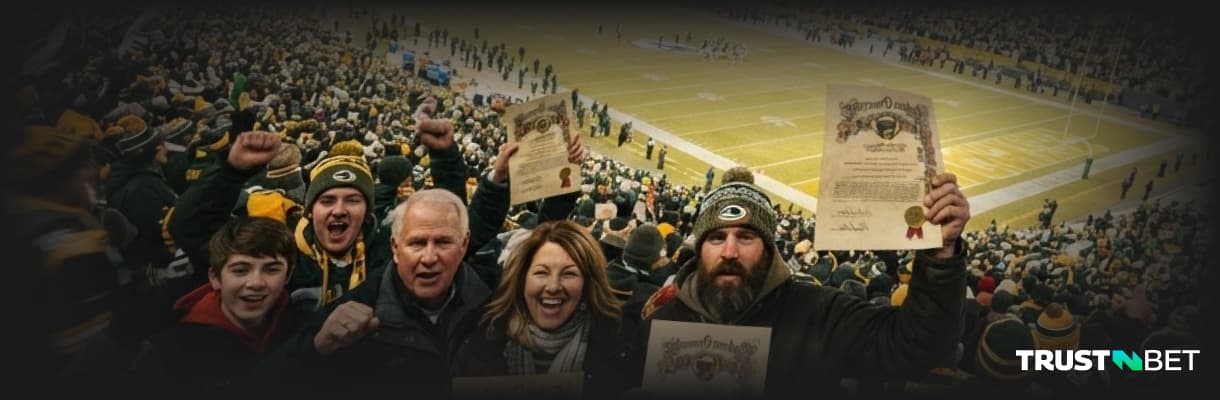
It is easy to treat Packers ownership as a charming NFL tradition—a certificate on the wall, an annual summer meeting and fans proudly calling themselves shareholders. Its real value is much bigger.
The structure makes relocation nearly unthinkable. It prevents one billionaire from using the franchise as leverage in a stadium dispute. It keeps the organization tied to Green Bay even as NFL valuations soar and other teams explore new cities, public subsidies and increasingly elaborate developments.
Private equity is built to find a profitable exit. The Packers are built to stay. That difference becomes more valuable as professional sports grows more expensive, financialized and detached from the communities that made the teams valuable in the first place.
Private Equity Would Create New Pressure
Private-equity firms do not invest for nostalgia. They invest because they expect an asset to appreciate and eventually produce a return. Even a passive stake introduces another financial objective. The investor needs a path to profit, whether through a future sale, refinancing, or continued franchise-value growth.
That can create pressure to maximize:
- Premium seating
- Ticket prices
- Sponsorship revenue
- Stadium development
- Real-estate holdings
- Media and commercial opportunities
Green Bay already needs to pursue many of those opportunities. The difference is where the money goes and who ultimately benefits. Under the current model, additional revenue strengthens the team, its reserve fund and the surrounding community. No institutional investor is waiting for an exit.

The Packers Need Discipline, Not a Wall Street Rescue
Green Bay’s operating loss should be treated as a warning light, not an emergency siren. Costs are rising. Other owners have access to capital the Packers cannot raise. Lambeau Field will require continued investment, and staying competitive away from the player payroll will become more expensive.
But the Packers are not financially trapped. They have record revenue, more than $700 million in reserves, one of the NFL’s strongest fan bases and a league business model that distributes hundreds of millions of dollars equally every year.
Private equity would give Green Bay faster access to cash. It would not automatically make the organization smarter, more competitive or more secure. The Packers’ greatest financial advantage is not an owner with deep pockets. It is that they do not have an owner whose pockets must be filled.
Green Bay does not need private equity. It needs to keep doing what has worked for more than a century: earn aggressively, spend intelligently, and remember who the franchise is built to serve.
