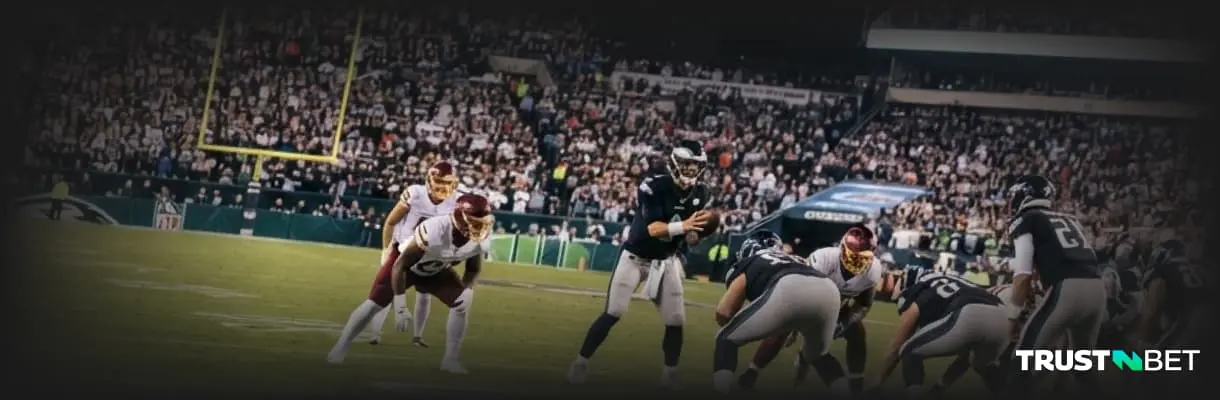
An NFL Game Has 60 Minutes on the Clock. Why Does It Take Three Hours?
An NFL game contains four 15-minute quarters. That gives us exactly 60 minutes of football.
So why can a game that begins at 1 p.m. still be going strong after 4 p.m.?
No, the league has not secretly added a fifth quarter. The explanation lies in the difference between game time and real time. The game clock records only selected parts of the action, while the stadium clock continues through incomplete passes, penalties, timeouts, replay reviews, commercials, and the occasional coach arguing with an official from 30 yards away.
During the NFL 2026 season, most viewers will dedicate roughly three hours to watching each game. Here is where all that additional time goes.
Stay ahead of the biggest games, surprising records, and stories shaping American sports. Explore the latest USA sports news for fresh updates from the NFL, NBA, MLB, and beyond.
Quick Answer: Why Do NFL Games Take So Long?
An NFL game lasts much longer than its official 60 minutes because the game clock repeatedly stops for:
- Incomplete passes
- Players going out of bounds
- Changes of possession
- Team timeouts
- Two-minute warnings
- Penalties
- Injuries
- Replay reviews
- Scoring plays
- Commercial breaks
- Halftime
The NFL itself describes its games as events designed to entertain fans for approximately three hours.
The Game Clock Does Not Run Continuously
Football is built around short, explosive plays rather than continuous movement.
The clock may run while the offense huddles and prepares for the next snap, but it stops in several common situations. An incomplete pass immediately kills the clock. A timeout stops it. Officials may also halt play to administer a penalty, measure for a first down, check an injury, or conduct a replay review.
Even after a play ends, the next one does not begin immediately.
The offense generally receives a 40-second play clock after the previous play ends. Following certain administrative stoppages, it receives 25 seconds. That time allows players to return to the huddle, receive a call, substitute, and line up.
Fans are still watching football during those moments. The official game clock, however, may be running, stopped, or waiting to restart depending on how the previous play ended.
Most Plays Last Only a Few Seconds
A quarterback may spend 25 seconds reading the defense, changing the protection and shouting instructions before the snap.
The play itself might last five seconds.
A running back takes the handoff, finds a gap, and is tackled. The officials spot the ball. Players separate themselves from the pile, return to their huddles, and prepare to do it again.
That stop-start rhythm is fundamental to American football. It gives coaches time to select personnel and call a new play for almost every situation.
Baseball is divided into pitches. Tennis is divided into points. Football is divided into compact collisions followed by detailed preparation for the next one.
The waiting is not separate from the strategy. It is part of it.
Commercial Breaks Fill Natural Stoppages
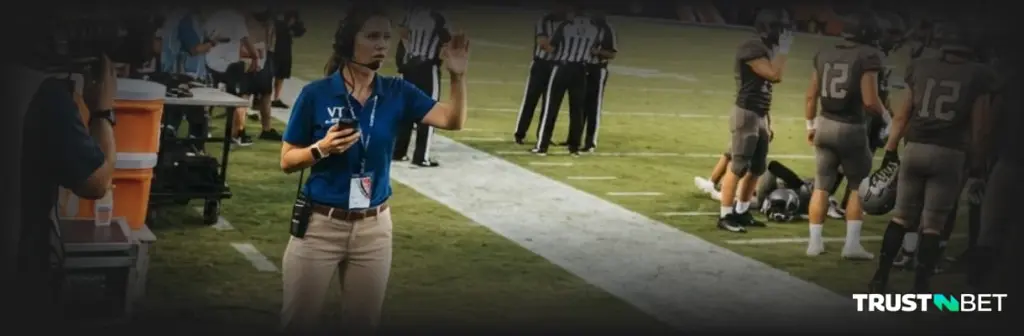
Television does not create every stoppage in an NFL game, but it certainly knows how to use them.
Commercial breaks are commonly placed after scores, changes of possession, quarter breaks, and other natural pauses. A touchdown may therefore be followed by an extra-point attempt, commercials, a kickoff and—in some cases—another break before the next offensive possession begins.
That sequence can feel much longer than the touchdown drive that produced it.
Broadcasters also have scheduled opportunities for television timeouts. A designated official helps coordinate those breaks with the network so the game does not resume while viewers are still watching an advertisement.
It is one of the stranger jobs in sports: keeping a live football game and a television broadcast on the same clock.
Each Team Gets Six Timeouts
Every NFL team receives three charged timeouts per half, giving the two teams a combined total of 12 potential timeouts during regulation.
Not every timeout is used. When the game is close, however, coaches may save them for the final minutes.
One real-world minute can take considerably longer when a team uses all three timeouts to stop the clock after consecutive plays. Add an incomplete pass, a penalty, or a replay review, and the final two minutes can become the longest part of the afternoon.
That is why “two minutes remaining” should never be interpreted as “the game will finish in two minutes.”
In NFL time, two minutes can contain an entire small drama.
The Two-Minute Warning Adds Another Break
The NFL automatically stops play when approximately two minutes remain in the second and fourth quarters.
Despite its name, the two-minute warning is not simply a friendly reminder for players who forgot to check the scoreboard. It is an official timeout that affects game strategy, clock management, and broadcasting.
Teams plan their late drives around it. A coach may avoid using a timeout because the automatic stoppage is approaching. An offense may attempt to run another play before the clock reaches two minutes.
For viewers, it also means another pause just as the tension is beginning to rise.
Replay Reviews Can Turn Seconds Into Minutes
A receiver catches the ball near the sideline. One angle appears to show both feet in bounds. Another suggests the second foot landed on the white paint.
The play may have taken four seconds. Deciding whether it counted can take much longer.
Replay officials examine multiple camera angles to determine whether there is clear evidence to change the ruling. Coaches can challenge certain decisions, while scoring plays, turnovers, and other situations may receive automatic review.
The review system is intended to improve accuracy, especially on plays that can decide games. The tradeoff is time.
A spectacular catch can therefore be celebrated, questioned, replayed six times, overturned and followed by a commercial—all before the next snap.
Penalties Stop More Than the Offense
When an official throws a flag, the game enters a separate process.
Officials must identify the foul, discuss the enforcement, inform the referee, and announce the decision. The affected team may need to accept or decline the penalty. Players then move to the correct yard line before the ball can be declared ready.
Most penalties are settled quickly. Confusing plays involving multiple fouls, possession changes, or clock adjustments take longer.
The five-second play is over. The paperwork has begun.
Injuries Cannot Be Placed on a Timer
Football is a physical sport, and some stoppages are more important than keeping a broadcast on schedule.
When a player remains on the ground, medical staff must be given sufficient time and space to evaluate him. Serious situations can create lengthy delays while trainers stabilize the player or arrange transportation from the field.
These stoppages are unpredictable. Unlike halftime or the two-minute warning, they cannot be scheduled or rushed simply because the game is running long.
Halftime and Quarter Breaks Add More Time
The transition between the first and second quarters is relatively brief, as is the break between the third and fourth.
Halftime is longer. Players return to their locker rooms, coaches make adjustments, and broadcast crews review the first half. The NFL’s operational schedule generally allocates around 13 minutes for halftime during standard games.
Special events can last much longer. The Super Bowl halftime show, for example, requires additional time for constructing and removing an entire concert stage in the middle of the field.
The players get a break. The field crew gets a workout.
Overtime Can Extend the Day
If the score is tied after four quarters, the game may enter overtime.
Regular-season NFL overtime uses 10 minutes. Current rules provide both teams with an opportunity to possess the ball, even if the team receiving the opening kickoff scores a touchdown.
Overtime does not always consume the full 10 minutes, but it can push a three-hour game considerably beyond its expected finishing time.
The official 2026 NFL rulebook contains the league’s complete timing and overtime procedures.
Is the NFL Trying to Make Games Shorter?
The league regularly adjusts rules and operational procedures to improve game flow without removing the strategy and drama that make football popular.
There is a limit to how much time can be removed. Football requires substitutions, play calls, officiating decisions, medical attention, and communication between the league, stadium, and broadcast crews.
Eliminating every pause would not simply shorten the game. It would fundamentally change the sport.
The official clock may show only 60 minutes, but an NFL game is not designed to provide 60 uninterrupted minutes of action. It is a three-hour tactical event constructed from dozens of short bursts.
And when the score is tied with two minutes remaining, nobody complains that it has lasted too long.
