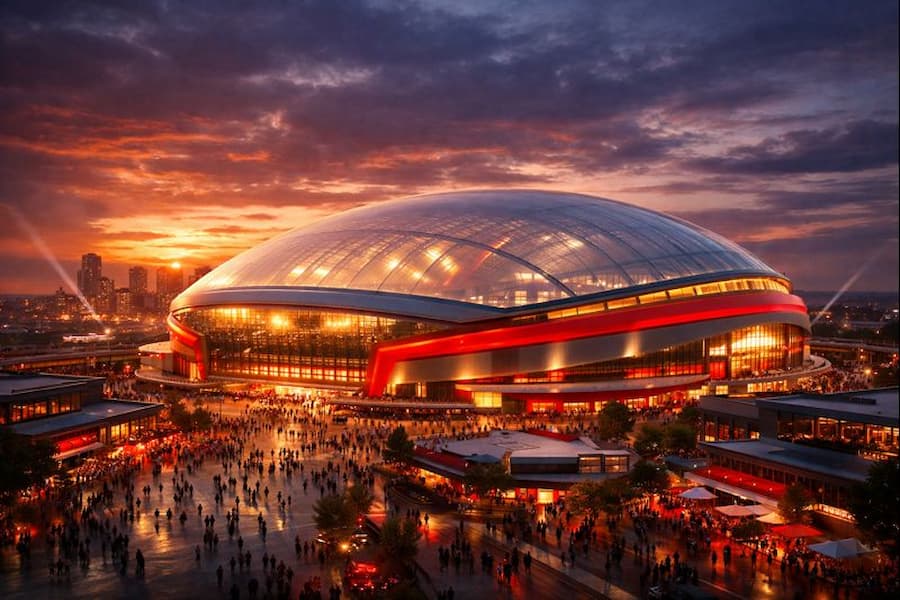
Chiefs Land NFL’s Biggest Stadium Deal in $4B Kansas Project
The Kansas City Chiefs have finalized what may be the most team-friendly stadium agreement professional football has ever seen — a deal so aggressive that it is already reshaping how franchises, cities, and states think about public funding in sports.
After Missouri voters rejected a tax proposal tied to renovations at Arrowhead Stadium, the Chiefs pivoted quickly. Just across the state line, Kansas responded with a stadium offer that dwarfed anything previously seen in the NFL, both in scale and in structure.
The result is a multibillion-dollar agreement that dramatically limits the Chiefs’ financial risk while granting the franchise sweeping control over stadium revenue, real estate development, and long-term stability.

Key Takeaways
- The Chiefs will receive approximately $1.8 billion in public funding, the largest stadium subsidy in U.S. sports history
- Kansas will own the stadium, but the Chiefs will control nearly all revenue generated inside it
- The new domed stadium is expected to open by the 2031 NFL season
- The deal includes billions more in publicly supported mixed-use development
- The agreement could become a blueprint for future NFL stadium negotiations
A Stadium Deal Built on Record Public Funding

At the center of the agreement is a new domed stadium projected to cost around $3 billion. Kansas has committed roughly $1.8 billion toward construction — a figure that surpasses all previous public contributions to an American sports venue.
Much of that funding will come through bonds backed by future tax revenue generated within a specially designated stadium district. Sales from hotels, restaurants, retail stores, and entertainment venues inside the zone will be used to repay the bonds over time.
Once a guaranteed construction price is finalized, Kansas must fund its full share promptly, while the Chiefs are only responsible for costs beyond the agreed cap — a structure that significantly limits the team’s downside risk.
Ownership Without the Burden
Although the stadium will be publicly owned, the Chiefs will operate it as if it were private.
The team will retain all revenue from ticket sales, concessions, parking, luxury suites, sponsorships, naming rights, and non-football events. Even the rent the Chiefs pay is largely redirected back into stadium operations, maintenance, and reserve funds rather than flowing into general state revenue.
The lease runs for an initial 30 years, with multiple renewal options that could keep the Chiefs in the building for up to 60 years.
Smaller Capacity, Bigger Profits
The new stadium is expected to seat fewer fans than Arrowhead Stadium, but that reduction is intentional.
Modern NFL venues prioritize premium seating, club areas, and luxury hospitality — all of which generate significantly more revenue per fan than traditional seating. The domed design also removes weather limitations, making the stadium viable for year-round events, concerts, and nationally televised showcases.
That flexibility positions the Chiefs as a future host for major events that previously bypassed the region.
A Massive Real Estate and Development Play

The stadium is only one piece of a much larger project.
The Chiefs are required to invest at least $1 billion in surrounding development, including a team headquarters, practice facilities, housing, hotels, retail spaces, offices, and entertainment venues. Portions of that investment are eligible for substantial public matching funds, potentially pushing the total government commitment well beyond the stadium itself.
The development plan also includes community spaces and affordable housing requirements, reinforcing the state’s goal of creating a full economic district rather than a single-use venue.
Minimal Taxes, Maximum Flexibility
The agreement allows for significant tax advantages tied to construction materials, property assessments, and long-term ownership structure. While final figures have not been publicly detailed, the framework strongly suggests the Chiefs will face limited ongoing tax obligations compared to traditional stadium arrangements.
Kansas receives limited perks — including access to community events and a single stadium suite — but those benefits are modest relative to the scale of public investment.
Why This Deal Changes the NFL

NFL teams have long relied on public money to build stadiums. What makes the Chiefs’ agreement different is how completely it consolidates leverage in favor of the franchise.
The Chiefs reduce financial exposure, control revenue, dictate development, and secure long-term certainty — all while the state absorbs much of the upfront risk.
Sports business analysts believe this deal will serve as a reference point for future negotiations, particularly for teams with strong brands, competitive success, and relocation leverage.
Stay updated with the latest sports news across the U.S.A. — stories, scores, and deals that matter.
Frequently Asked Questions
After Missouri voters rejected a tax proposal to fund major renovations, the Chiefs explored alternatives. Kansas offered a more comprehensive and financially favorable plan centered on a new stadium and surrounding development.
Kansas has committed approximately $1.8 billion in public funding, making it the largest stadium subsidy in U.S. sports history.
The stadium will be publicly owned by the state, but the Chiefs will operate it and retain nearly all revenue generated at the venue.
The stadium is required to be completed in time for the 2031 NFL season.
The size of the public subsidy, the revenue control granted to the team, the limited financial risk for the Chiefs, and the scale of accompanying development make it unlike any previous NFL stadium agreement.
