Inside Topgolf’s Meteoric Rise…and Why Callaway Is Pulling Out
Less than five years after acquiring Topgolf for $2 billion, Callaway Golf is selling a 60% stake in the business to private equity firm Leonard Green & Partners, valuing the company at $1.1 billion — a 45% drop from the original purchase price. Callaway will retain a 40% minority stake, marking the end of what many now view as one of golf’s most ambitious and challenging strategic bets.
Key Takeaways: Inside Topgolf’s Rise and Fall
- Callaway’s bold bet on Topgolf didn’t pay off: Rising costs, debt pressure, and weak synergies turned the acquisition into a major strategic misfire.
- Topgolf’s entertainment-first model initially worked: Short, social, climate-controlled experiences attracted casual golfers and non-golfers.
- Financial and operational mismatch: Callaway’s high-margin, predictable equipment business didn’t align with Topgolf’s capital-intensive, low-margin venue model.
- Private equity reset ahead: Leonard Green’s acquisition simplifies Topgolf’s balance sheet, slows expansion, and refocuses the business on profitability.
- Callaway refocuses on its core business: With $770 million in net proceeds, the company can pay down debt, repurchase stock, and concentrate on golf equipment and apparel.

Topgolf’s Rise: Entertainment Meets Golf
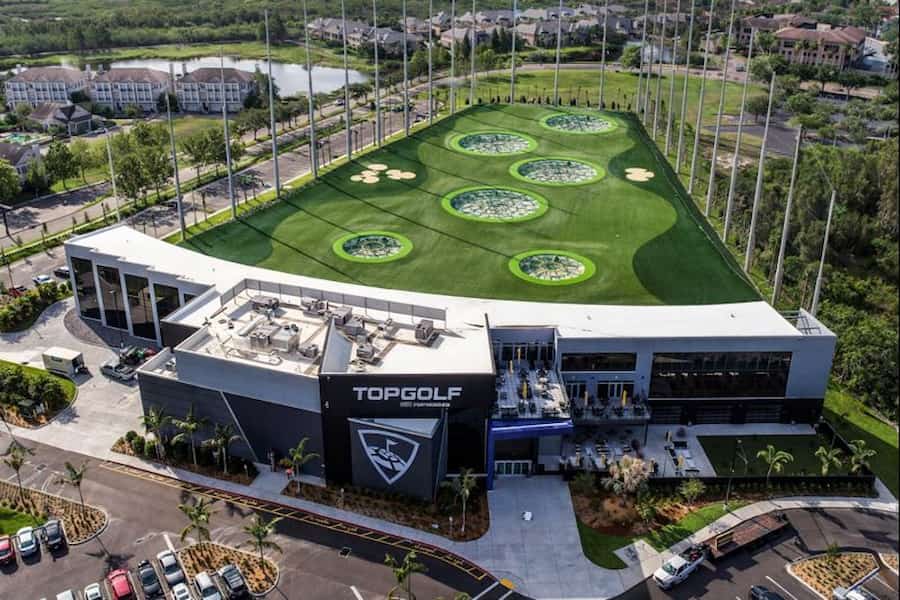
Topgolf transformed the driving range into a social entertainment destination, attracting both golfers and casual participants. Customers could enjoy a 1–2 hour experience with games, food, drinks, and music — far shorter and more accessible than traditional 4–5 hour rounds of golf. Climate-controlled venues eliminated weather concerns, making it a reliable outing year-round.
Financially, Topgolf seemed promising: venues cost $30–40 million to build, but generated $20–30 million in annual sales, leading to a payback period of roughly 2.5 years. Beyond gameplay, food, beverages, corporate events, and technology licensing drove the majority of revenue.
Callaway saw synergy potential. With Topgolf’s 30+ million annual visitors, the plan was to cross-sell equipment and apparel, integrate premium fitting centers, and grow recently acquired clothing brands like TravisMathew. In theory, the combination would expand Callaway’s reach while generating operational efficiencies.
Where Things Went Wrong
Despite the bold vision, multiple factors eroded Topgolf’s profitability and made the merger a difficult fit:

1. Rising Costs and Debt Pressure
Topgolf relied on sale-leaseback financing, putting up $7.5 million of cash to build $30 million venues and selling the property to a REIT. This model worked in a low-interest environment, but post-pandemic rates soared from 0.05% to 5.3%, consuming nearly 90% of operating income. Inflation, supply chain disruptions, and rising labor and material costs worsened the picture.
2. Same-Venue Sales Decline
While Topgolf opened about 10 new venues per year, existing locations saw sales decline: –3% in 2023, –9% in 2024, and –10% in 2025. Corporate events fell 13% in 2024 alone. Pricing and loyalty initiatives couldn’t reverse this trend, revealing structural challenges rather than tactical missteps.
3. Business Model Incompatibility
Callaway is a high-margin equipment manufacturer with predictable cash flow. Topgolf is a CapEx-heavy, low-margin entertainment business that depends on debt. Attempting to merge these fundamentally different models created a conglomerate discount, leaving investors confused and Callaway’s stock underperforming competitors like Acushnet.
4. Synergies Never Materialized
Despite intentions, cross-selling opportunities were minimal, fitting centers were slow to roll out, and operational efficiencies were limited. Topgolf largely operated independently, with rising expenses and no meaningful integration, undermining the merger’s original rationale.
The Private Equity Reset
Selling a majority stake to Leonard Green allows Topgolf to:
- Simplify its cost structure and balance sheet
- Slow expansion while focusing on unit economics
- Standardize venues and rebuild the corporate events pipeline
Meanwhile, Callaway receives $770 million in net proceeds, which will help reduce debt, buy back stock, and refocus on its core equipment business.

Lessons for Golf and Business
Topgolf’s rise demonstrated the power of experience-based golf and its ability to attract new demographics. Its challenges show that even a wildly successful brand can struggle when merged with a business that operates under entirely different financial and operational rules.
For Callaway, the sale marks a strategic reset: returning to its roots in equipment and apparel while benefiting from Topgolf’s future growth as a private entity under experienced investors.
Topgolf’s story is a reminder that innovation alone isn’t enough — execution, timing, and compatible business models are just as critical for long-term success.
More stories like this?
Read the latest from Sports News U.S.A. — where sports meets business and strategy.
