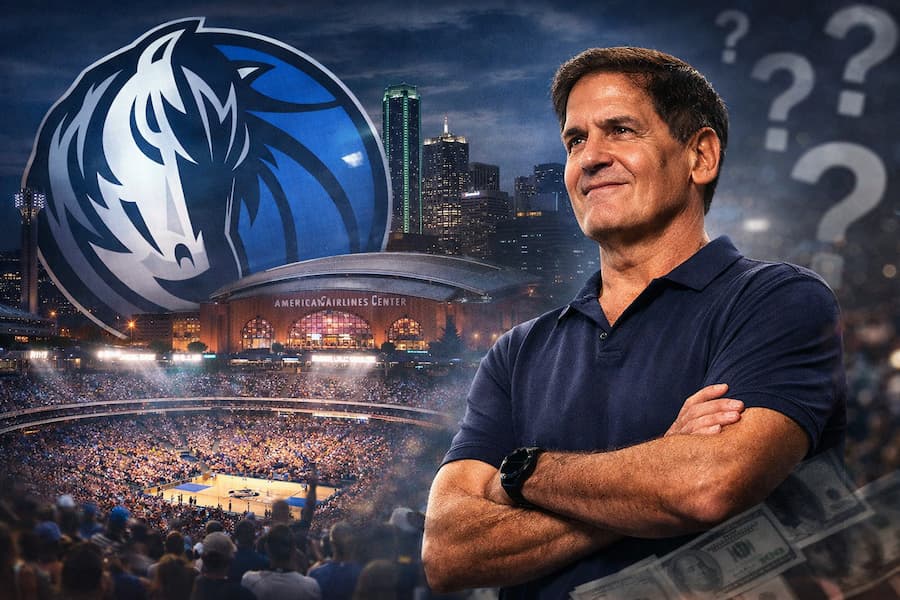
Mark Cuban Back in the Mavericks? What Billion-Dollar Rumors Are Saying
The Dallas Mavericks are back in the spotlight after fresh speculation linked Mark Cuban to a possible return to team control. It sounds unlikely—but behind the scenes, a stalled casino plan in Texas may be changing the math. Here’s what’s actually driving the rumor—and what to watch next.
What’s new: Recent reporting reignited rumors of a Cuban-backed investor group exploring a path back to the Mavericks, as uncertainty grows around the franchise’s long-term arena and development plans.
Key Takeaways
- The rumor has real business roots: The original Mavericks sale was tied to a casino-centered real estate plan in Texas that’s now stalled.
- Politics changed the math: Without legalized casino gambling, the long-term upside of the original deal looks very different.
- A buyback is unlikely—but possible: Any return would likely involve new investors and a complex ownership structure.
- The next year is critical: Arena decisions and Texas politics in 2026 could reshape the franchise’s future.
- Fans feel the uncertainty: Recent on-court and front-office turbulence has amplified ownership speculation.

Why This Rumor Reignited This Week
The Mavericks have had a turbulent stretch: headline-grabbing roster moves, front-office turnover, and now whispers about ownership. On paper, it’s hard to imagine a team changing hands twice in just a few years. But timing matters—and so do incentives.
The original sale wasn’t just about basketball. It was built around a broader real estate vision: a new arena anchored inside a massive entertainment district in Texas. The biggest value driver in that plan? Casino gaming.
That’s where things get complicated.
The Casino Bet That Changed the Equation

The current ownership group’s long-term strategy hinged on legalizing casino gambling in Texas to unlock the full value of a mixed-use district tied to a future arena. Years of lobbying and political spending have followed. Results haven’t.
Texas still requires a high bar to change gambling laws, and momentum has cooled rather than accelerated in recent election cycles. Meanwhile, the Mavericks’ current arena lease runs toward the end of the decade—forcing real decisions soon about where and how the team will play next.
If casino gaming isn’t happening on the timeline the original plan assumed, the upside of owning the team (plus adjacent land) looks very different.
Why Mark Cuban Might Be Interested Again
Cuban didn’t sell because he fell out of love with basketball. He sold because he believed NBA franchise values would increasingly be driven by large-scale real estate and entertainment projects—areas where his buyers had deeper experience.
If the casino-centered vision stalls, that original logic weakens. What remains is a basketball franchise with huge brand value—and that’s Cuban’s wheelhouse.
There’s also the human factor. Cuban’s identity is deeply tied to the Mavericks. Fans still associate the franchise with his leadership, and recent chaos has only fueled nostalgia for stability.
Could a Buyback Actually Happen?

In theory: yes. In practice: it’s complicated.
Any ownership change would need:
- League approval
- Massive financing or investor backing
- A structure that works for the current owners, who’ve already seen the franchise’s valuation climb
- Potentially, a split between team ownership and real estate development
One scenario insiders have floated: Cuban partners with new investors to regain control of basketball operations while the original owners retain or spin off the real estate side. It’s complex—but this is how deals get done at the billionaire level.
What This Means for Mavericks Fans (Right Now)
- Short term: Expect noise. Ownership rumors tend to spike during periods of on-court and front-office instability.
- Medium term: The arena decision window will reveal a lot about long-term direction.
- Long term: If the original development vision loses its economic edge, ownership strategies can change fast.
What Could Happen Next (2026 Timeline)
- Arena signals: Where the team plans to play will hint at whether the original mega-project vision is alive or being hedged.
- Political reality check: If Texas gambling laws remain stalled, the business case shifts.
- Ownership posture: Any move to separate team operations from development would be a strong tell.
The Bottom Line
Could Mark Cuban really buy back the Mavericks?
It’s unlikely—but no longer crazy to discuss.
This isn’t just sports gossip. It’s a high-stakes business story about what happens when a multi-billion-dollar plan runs into political reality. If the original vision behind the sale no longer pencils out, ownership strategies can change—quickly.
For now, the Mavericks remain under current control. But if the development math keeps moving in the wrong direction, don’t be surprised if this rumor sticks around longer than most.
Want the full scoop on America’s biggest sports stories? From Mark Cuban’s Mavericks moves to the latest NBA drama, get all the U.S. sports news you need right here—stay informed and stay ahead.
