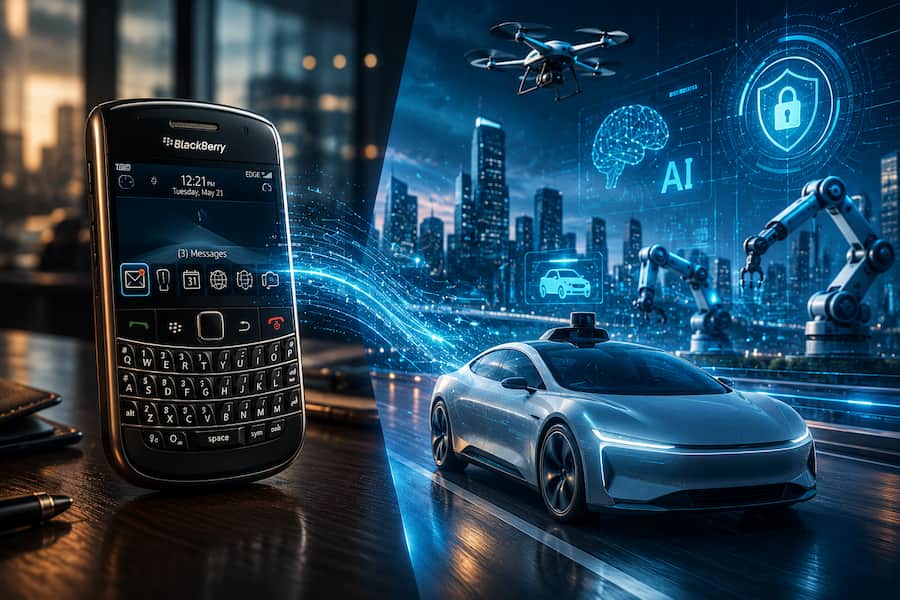
BlackBerry Isn’t a Phone Company Anymore…Here’s What It Does Now
Most people think BlackBerry disappeared when smartphones took over. The truth is far more surprising.
There was a time when a BlackBerry was the ultimate status symbol. If you worked on Wall Street, in Washington, or in a Fortune 500 boardroom, chances are you carried one. Its physical keyboard became iconic, BlackBerry Messenger changed how people communicated, and the company once controlled more than half of the U.S. smartphone market.
Then Apple introduced the iPhone. Android followed soon after. Within a few years, BlackBerry’s dominance vanished. Its smartphones disappeared from stores, its market value collapsed, and many assumed the company had become another casualty of the smartphone revolution.
But BlackBerry never actually went away. Instead, it quietly reinvented itself—and today its technology powers hundreds of millions of vehicles while expanding into robotics, medical devices, and what many experts believe is the next frontier of artificial intelligence.
The company that once built phones is now building software that could become an invisible but essential part of tomorrow’s AI-powered world.
Catch the latest sports news in the USA, featuring breaking headlines, game analysis, and updates from every major league.
Key Takeaways: BlackBerry Quietly Reinvented Itself
- BlackBerry no longer manufactures smartphones.
- Its QNX software is embedded in more than 275 million vehicles worldwide.
- QNX helps operate safety-critical vehicle systems where failures aren’t an option.
- The company is expanding into robotics, medical technology, drones, and industrial automation.
- Many investors now view BlackBerry as a software and AI infrastructure company rather than a former smartphone maker.
You Probably Use BlackBerry More Than You Realize
Here’s the surprising part. Even if you haven’t touched a BlackBerry phone in over a decade, there’s a good chance you’ve still used BlackBerry technology.
If you’ve driven or ridden in a newer vehicle from manufacturers such as Toyota, BMW, Ford, Volkswagen, or many other global brands, you’ve likely interacted with software developed by BlackBerry.
You just didn’t know it. That’s because today’s BlackBerry doesn’t make consumer gadgets. It builds the software working quietly behind the scenes.
BlackBerry by the Numbers
The company’s transformation becomes even more impressive when you look at the numbers.
- 📱 Once controlled more than 50% of the U.S. smartphone market
- 🚗 QNX now powers more than 275 million vehicles worldwide
- 🏭 Used by over 45 automakers
- ⚡ Trusted by all of the world’s top 10 automotive OEMs
- 🔋 Integrated into 24 of the top 25 electric vehicle manufacturers
- 🏥 Used by 9 of the world’s top 10 medical device companies
- 💰 Generates revenue through long-term software licensing and royalties instead of selling hardware
That’s a remarkable transformation for a company many people assumed had disappeared years ago.
So What Exactly Is QNX?
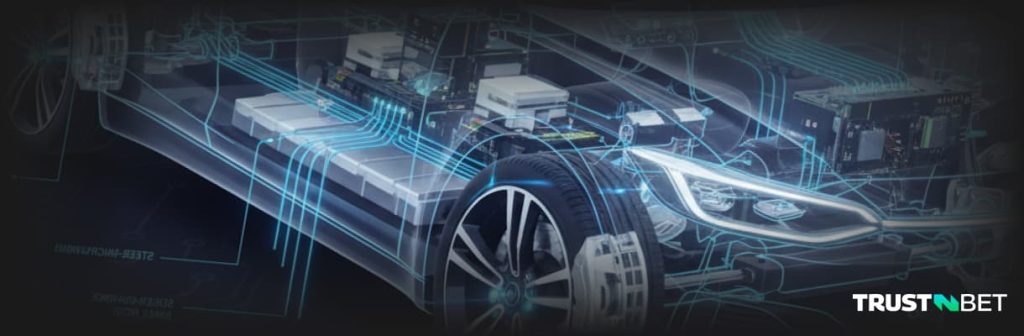
The engine behind BlackBerry’s comeback is called QNX. Unlike Windows, Android, or iOS, QNX isn’t designed for browsing the web or checking social media.
It’s what’s known as a real-time operating system, built for situations where software must respond instantly and predictably.
Think of it this way. If your laptop freezes for a few seconds, it’s annoying. If the software controlling a vehicle’s braking system freezes for a few seconds, the consequences could be catastrophic.
That’s why QNX exists. It helps manage systems where every fraction of a second matters.
Why Modern Cars Depend on It
Today’s vehicles are no longer just machines with engines. They’re rolling computers. Modern cars contain dozens of processors controlling everything from digital dashboards and navigation systems to collision avoidance, adaptive cruise control, lane-keeping assistance, airbags, steering, and braking.
When a vehicle traveling at highway speeds detects an obstacle, those systems must communicate almost instantly. QNX is designed to provide that reliability.
Instead of being the entertainment system you notice on the dashboard, it’s the software underneath many of the systems drivers rely on without ever seeing.
BlackBerry Isn’t Betting Only on Cars
While automobiles remain its largest market, BlackBerry sees an even bigger opportunity ahead. Its software is increasingly being adopted across industries where safety, security, and reliability are critical.
That includes:
- 🤖 Humanoid robots
- 🏭 Smart factories
- 🚁 Autonomous drones
- ❤️ AI-powered medical devices
- 🚜 Industrial machinery
- 🚛 Autonomous logistics equipment
- ⚙️ Connected industrial systems
As these technologies become more intelligent, they’ll also require software capable of making dependable decisions in real time. That’s where BlackBerry believes it has an advantage.
The Rise of Physical AI
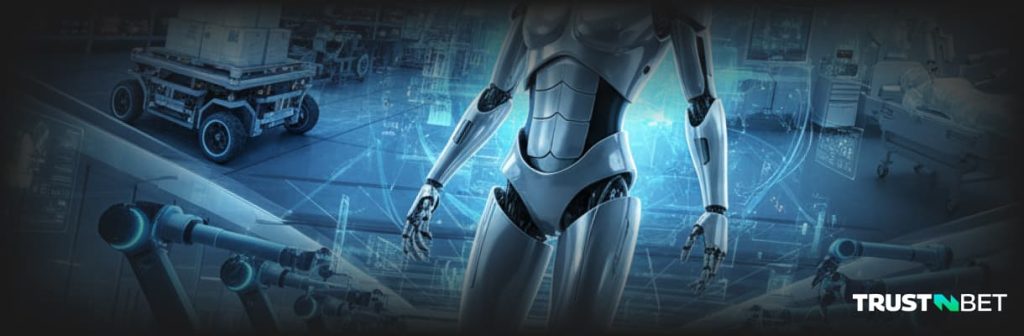
Most people think of artificial intelligence as something that lives on a screen.
- Chatbots answer questions.
- Image generators create artwork.
- Virtual assistants summarize emails.
That’s only one side of AI. The next wave is expected to move into the physical world.
Imagine:
- A warehouse robot moving heavy equipment.
- A robotic surgical system assisting doctors.
- A self-driving delivery vehicle navigating busy streets.
- An autonomous tractor working on a farm.
- Industrial robots assemble products around the clock.
These machines don’t just process information. They interact with the real world. That means they need software that can make decisions safely, consistently, and without delay.
Many analysts refer to this trend as physical AI—and it’s one of the biggest reasons BlackBerry has returned to investors’ radar.
Why BlackBerry’s Partnership With Nvidia Matters
Another reason BlackBerry has attracted renewed attention is its collaboration with Nvidia. Nvidia has become one of the world’s leading suppliers of AI hardware and software, especially for autonomous machines and robotics.
BlackBerry’s role is different. Rather than building AI chips, it provides the software layer that helps those intelligent systems operate safely in regulated environments.
It’s a partnership that reflects a broader trend in technology: AI isn’t just about creating smarter machines—it’s also about making sure those machines behave safely and reliably.
A Business That Looks Nothing Like Its Past
BlackBerry today generates revenue very differently from it did during the smartphone era. Instead of relying on consumers to buy a new phone every few years, much of its business comes from software licensing and royalties.
When manufacturers choose QNX for a vehicle or another connected product, BlackBerry can continue earning revenue as those products enter production.
The company has also reported a growing backlog of future royalty contracts, suggesting additional products using QNX are still moving through the development pipeline.
While future demand will depend on production volumes and market conditions, the backlog offers insight into how many companies are designing products around BlackBerry’s software.
The Reinvention Few Saw Coming
BlackBerry’s story isn’t just about surviving. It’s about adapting. Instead of trying to win back the smartphone market, the company leaned into the one thing it had always done well: secure, reliable software for mission-critical systems.
That decision transformed BlackBerry from a consumer electronics company into an enterprise software business with applications reaching far beyond smartphones.
Few technology companies successfully reinvent themselves after losing the product that made them famous. BlackBerry may have done exactly that.
BlackBerry’s Journey at a Glance
- 1984 – Company founded in Waterloo, Ontario.
- Late 1990s–2000s – BlackBerry becomes the world’s leading business smartphone.
- 2009 – President Barack Obama famously fights to keep using his BlackBerry after entering the White House.
- 2013 – Annual revenue peaks at more than $11 billion.
- 2016 – The smartphone business effectively comes to an end.
- Today – BlackBerry focuses on cybersecurity, secure communications, and QNX software powering hundreds of millions of connected devices.
Why This Matters
BlackBerry’s comeback isn’t about bringing back the keyboard phone. It’s about finding a new purpose in a world increasingly powered by software.
As connected vehicles, robotics, medical technology, and artificial intelligence continue evolving, demand for dependable software will likely grow alongside them. Whether BlackBerry ultimately becomes a dominant player in physical AI remains to be seen.
But one thing is already clear. The company that once defined the smartphone era has quietly reinvented itself for a very different future. Millions of people may never hold another BlackBerry phone.
Yet every day, many are already relying on BlackBerry technology without ever realizing it—and that may be the company’s most remarkable transformation of all.
